
Free AI in Every Client’s Pocket: Introducing Capitec Scam Checker

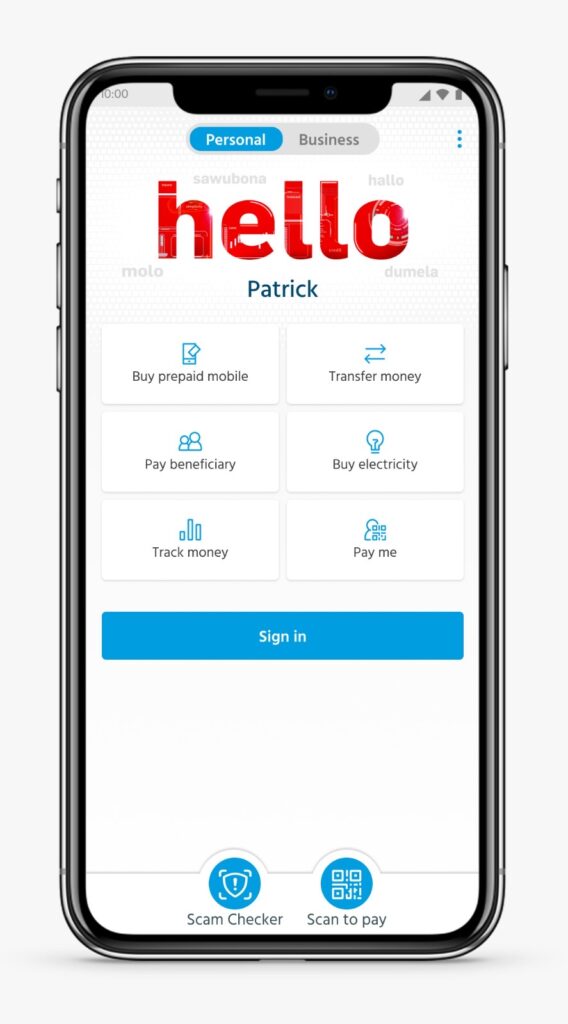
Capitec Scam Check is a free AI tool in the Capitec app. Clients send a suspicious link, screenshot or image and receive a clear result, such as green Safe to continue or red Do not continue. It is available in My security centre and on the sign in screen, and it is guidance rather than a guarantee.
Many of the scams that hurt our clients don’t begin with an attack on our systems; they begin with a message. Over the next few weeks we’re rolling out Scam Checker, a free AI tool inside the Capitec app that lets any client send us a suspicious link, some text, a screenshot or an image and get a quick, clear view on whether it looks risky before they act on it. This post covers why we built it, how it works, where it falls short, why we decided it should cost our clients nothing, and how it strengthens our fraud teams at the same time.
1. The problem we keep seeing
A delivery SMS about a parcel you weren’t expecting, an email that looks exactly like SARS asking you to confirm your banking details, a WhatsApp from a “friend” with a link that needs clicking right now: these are familiar starting points for the losses our clients suffer. The criminals behind these campaigns are patient, well organised and increasingly good at what they do, and the honest truth is that a convincing fake link is very hard for anyone to spot in the few seconds it takes to tap it, particularly when the message has been designed to make you feel rushed or worried.
We spend a great deal of engineering effort detecting fraud inside the bank, but by the time a suspicious transaction reaches us the client has often already been persuaded that everything is legitimate. The moment that matters most comes earlier, when someone looks at a message and quietly wonders whether it’s real. That moment of doubt is exactly where we wanted to be able to help.
2. What Scam Checker does
The idea is deliberately simple. If you receive something suspicious, whether it’s a message, an email or an SMS, you send it to us as a link, some text, a screenshot or an image, and our AI assesses it and tells you whether it looks safe or whether you should stop.
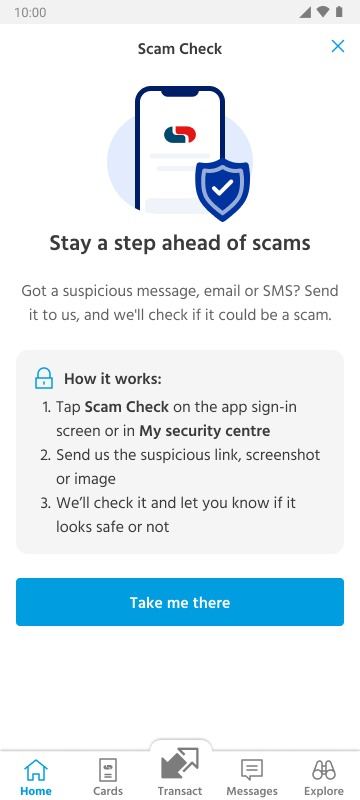
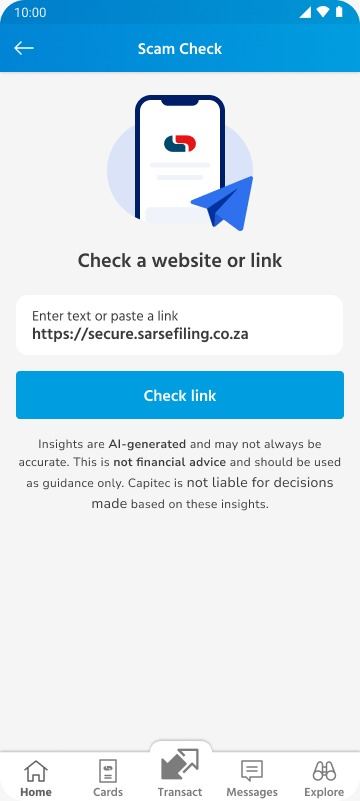
You can paste a link or some text directly into the app, and the assessment comes back in a few moments.
The result is designed to be understood at a glance, because anyone who is rushed or anxious about a message needs a quick answer they can actually follow. A link to the real SARS eFiling site comes back green with “Safe to continue” and a short explanation of what the site actually is.
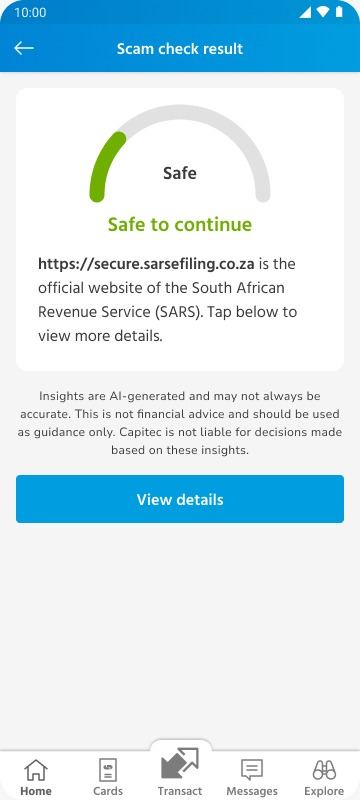
It’s worth being precise about what that green result means. It tells you the link itself points to the genuine SARS site; it doesn’t verify the person who sent it to you, the story in the message around it, or what you’re being asked to do once you’re there. A real link can still arrive inside a scam, so a green result is one useful signal rather than a clean bill of health for the whole interaction.
A shortened link pretending to be a courier comes back red with “Do not continue”, along with a plain statement that it’s a scam link for a fake delivery company and that you shouldn’t open it.
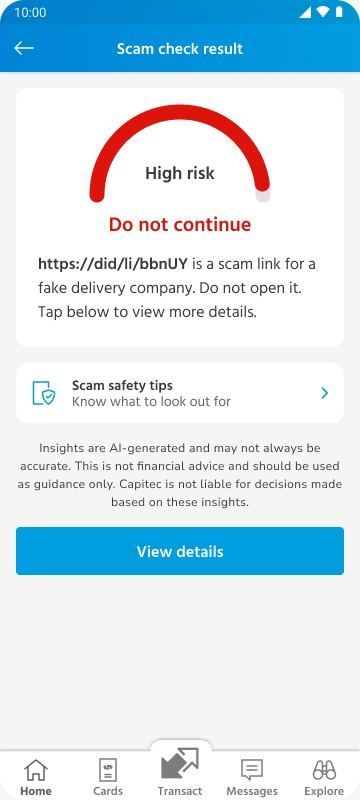
In both cases you can tap through for more detail, and on a high risk result we point you straight to safety tips on what to look out for next time.
3. Advice, not a decision
Scam Checker gives you advice; it doesn’t make the decision for you, and it doesn’t block anything. Whatever the result says, the choice about whether to open a link, reply to a message or make a payment remains yours. We’ve designed it that way deliberately: we want to give clients a well informed second opinion at the moment they need one, while respecting that they know their own circumstances and remain in control of their own money.
4. Available before you even sign in
One design decision I’m particularly pleased with is where Scam Checker lives. You’ll find it in My security centre alongside Feature lock, Trusted Approver, Hide account and Contact Lock, which together form the set of controls clients can use to protect themselves.
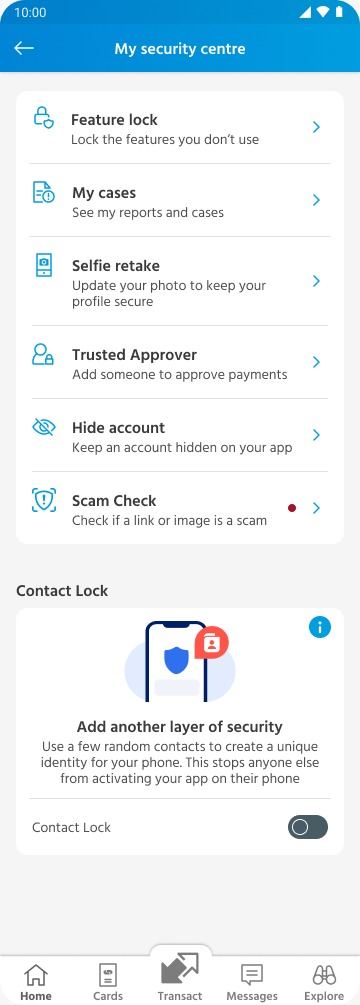
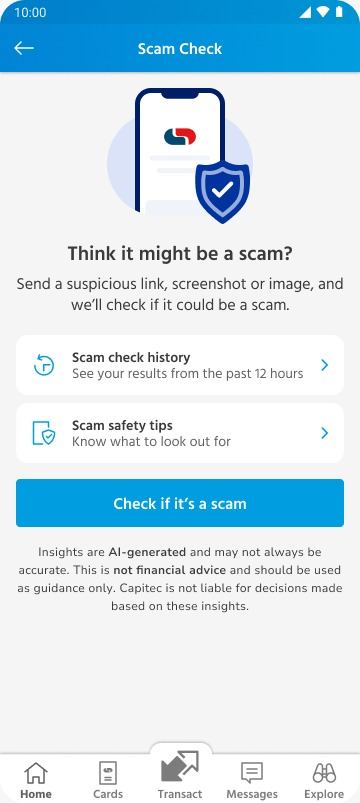
You can also reach Scam Checker straight from the app sign in screen, so nobody has to log into their banking just to ask a simple question about a message they’ve received. The lower the friction, the more likely people are to check before they click rather than after the damage is done. From the Scam Checker home screen you can start a new check, see your results from the past 12 hours in your scam check history, or read through the safety tips.
5. There is no perfect system here
I want to be completely clear about this: no scam detection system is perfect, and Scam Checker isn’t either. Under the hood it’s built on Amazon Bedrock, and in our testing the technology proved extremely effective at flagging high risk links and known scam patterns, which covers a large share of what clients actually receive day to day. Where it struggles more is with the scams that don’t look like scams at all, particularly too good to be true investment schemes. These are often built around a polished website, a plausible story and a persuasive person on the other end of a chat, and the danger lies less in any single link than in the promise being made. A tool that assesses a link or a screenshot will find these much harder to call with confidence.
The team understood these limits from the start, and not trying simply wasn’t an option for them. Waiting for a perfect system would mean leaving clients with nothing at the moment they most need help, while the criminals carry on regardless. So we’ve shipped something that is genuinely useful today, been honest about where it falls short, and committed to keep improving it as the scams themselves evolve.
That’s also why the app states clearly that the results are AI generated guidance rather than a guarantee, and that they aren’t financial advice. If something feels wrong, trust that instinct and verify independently. Never share your PIN, passwords or one time codes with anyone, and if you’re unsure about a message, contact Capitec directly through the app or our official channels rather than through any number or link contained in the message itself. If an investment promises returns that seem too good to be true, treat that promise itself as the warning sign, whatever any tool tells you.
6. Why we’re giving this away
There’s a reasonable argument that AI tooling like this should be a premium feature, and I don’t agree with it. Scams disproportionately hurt the people who can least afford to lose the money, and protection against them should reach everyone rather than only the clients who pay for extras. Putting capable AI directly into our clients’ hands, at no cost, is one of the most practical and useful things a bank can do with this technology right now.
When a check helps someone recognise a scam and stop before acting, it can prevent both the financial loss and the distress that so often follows, from the anxious calls to the long process of disputing a payment. Not every check will end that way, but each one that does is a family spared a very bad day, and that’s reason enough to make the tool available to everyone.
7. A gift for clients, intelligence for our fraud teams
There’s a second benefit that I think is just as important, even though clients will never see it directly. When Scam Checker reviews a suspected scam site, the process of examining and crawling that site often surfaces exactly the details the criminals need in order to get paid: the bank account numbers they ask victims to pay into, the payment references they use, and the patterns that tie one campaign to the next. That information belongs to the scammers, not to the client who sent us the link, and it gives our fraud teams something concrete to act on.
This matters because a scam is almost never aimed at just one person. The same fake courier site or fraudulent investment page is usually sent to thousands of people at once, and some of them won’t think to check before they pay. When one client sends us a suspicious link, the intelligence we gather from it can help our fraud teams spot payments heading to the same accounts, recognise other clients who may already have been caught, and move faster on their behalf. So every check is a gift to the client who runs it, and potentially a source of protection for clients who never ran one at all.
8. What’s next
Scam Checker is rolling out to clients progressively over the coming weeks, so if you don’t see it in your app yet, it’s on its way. When it arrives, please use it, and more importantly tell your parents, your grandparents and anyone else in your life who might be the next target. Pausing to get a second opinion before acting is one of the most valuable habits anyone can build, and Scam Checker makes that pause free, quick and available whenever a message doesn’t feel quite right.