Engineering Leadership: Hard Truths for Tech Leaders
Why your best engineers leave, how bad org structures quietly destroy teams, and what separates engineering leaders who scale from those who stall.


AI Supercharges Confidence, NOT Judgement: Why AI Is Making Technical Leadership Harder, Not Easier
Put ten surgeons in a theatre. Each has twenty years behind them, thousands of procedures, and a working memory of every time an apparently simple decision went wrong at hour four. They examine the patient and arrive, independently, at the same conclusion: this operation is a bad idea. Standing next to them is a man […]
Read more →
The Last Mile Fallacy: Why Organisations Misvalue Work
1. Introduction Organisations like to believe they reward outcomes. In reality, they reward visibility. This is the essence of the Last Mile Fallacy: the mistaken belief that the final visible step in a chain of work is where most of the value was created. We tip the waiter rather than the chef, praise the presenter […]
Read more →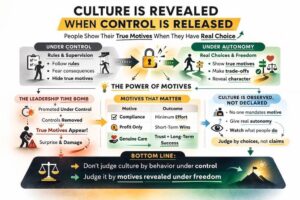
Why Motive Under Autonomy Reveals True Leadership Culture
Culture is not revealed by behaviour under control, but by motive under autonomy. Highly controlled environments mask intent and allow organisations to promote leaders whose inner compass has never been tested. When controls are later removed at seniority, behaviour shocks leadership and risk materialises. Durable outcomes, whether in fraud prevention, customer trust, or leadership quality, […]
Read more →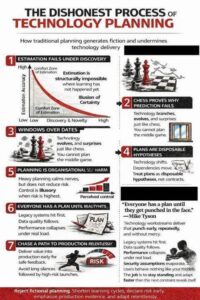
Why Technology Planning Is Fundamentally Dishonest
1. Estimation Fails Exactly Where It Is Demanded Most Estimation is most aggressively demanded in workstreams with the highest discovery, the highest uncertainty, and the highest intellectual property density. This is not an accident. The more uncomfortable the terrain, the more organisations reach for the false comfort of numbers. In these environments, estimation is not […]
Read more →
Why Core Banking Was a Bad Idea From the Start
A companion piece to Core Banking Is a Terrible Idea. It Always Was. It is 1972. A group of very serious men in very wide ties are gathered in a very beige conference room. They are about to make decisions that will haunt your change advisory board fifty years from now. The following is a […]
Read more →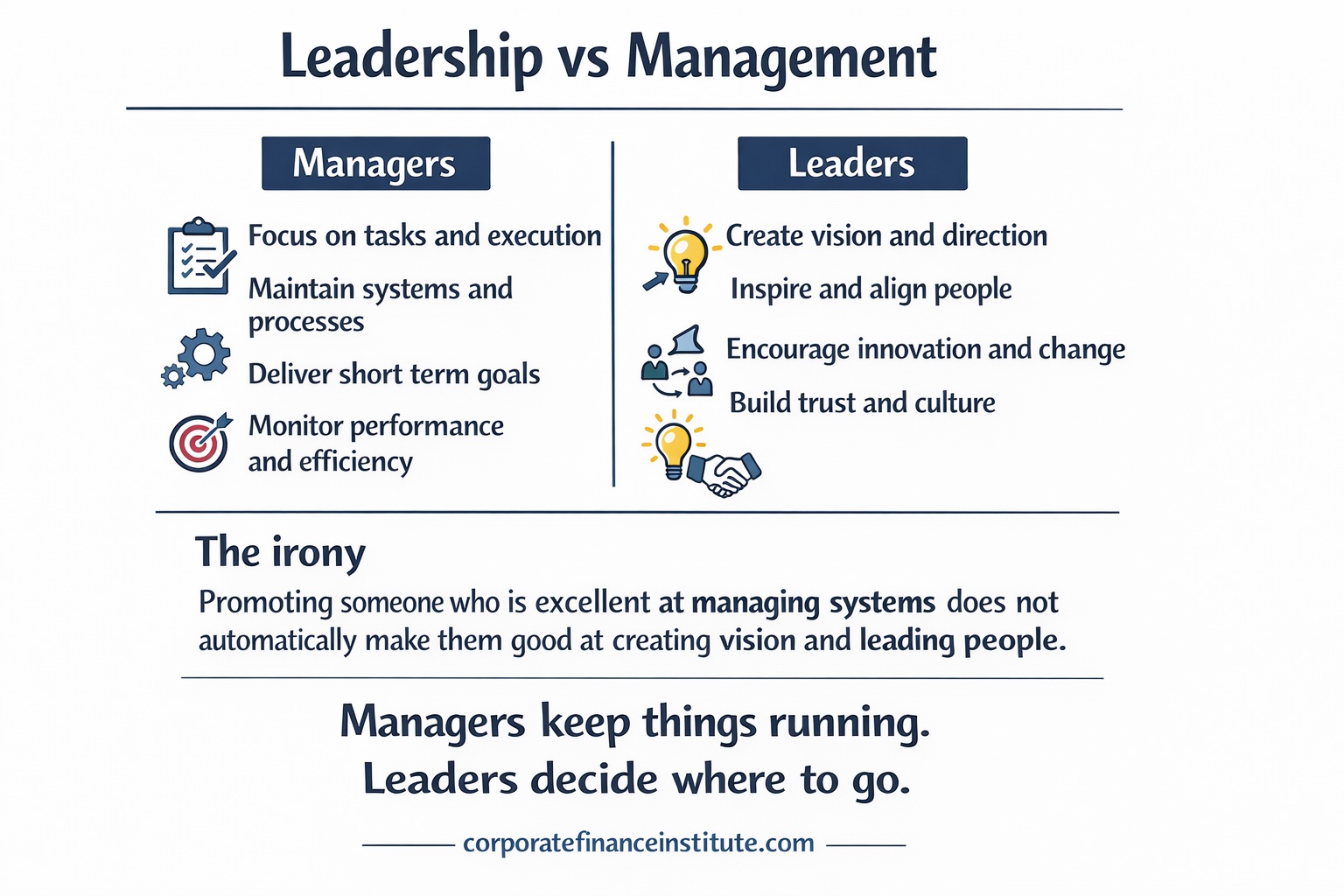
Management vs Leadership: Why Promoting Managers Fails
Management and leadership sound so similar that they are often used interchangeably. True, they are both a sport. But details matter when you want to win. Nowhere is this more visible than in financial services. Banks today do not compete inside a known, stable competitive set. The threat landscape runs from a two-person fintech with […]
Read more →
The Number One Skill Every Leader Must Work On
Someone sent me a reel this morning, a clip from Lewis Howes, and it stopped me. He was describing a conversation with a brain surgeon, someone who had performed over a thousand brain surgeries and who also studies the mind, and he had asked him what one skill human beings should learn to master. The […]
Read more →
How Agile Lobotomised Teams and Killed Independent Thinking
In One Flew Over the Cuckoo’s Nest, the story is set inside a psychiatric institution run not for healing, but for control. The ward is orderly, predictable, and calm on the surface. Patients follow rigid routines. Group therapy sessions exist, but nothing meaningful ever changes. Any behaviour that challenges the system is treated as dangerous. […]
Read more →
Leadership Bloat: When Management Consumes the Business
1. The Shoe Planet Problem In The Hitchhiker’s Guide to the Galaxy, there is a planet where the inhabitants become so obsessed with shoes that the shoes eventually take over. The civilisation does not collapse because it lacks intelligence. It collapses because something peripheral accumulates mass until it dominates everything essential. Leadership bloat is the […]
Read more →
Wise Counsel vs the Corporate Leaf Blower: Why One Note Leadership Fails
There is a sound most of us have learned to tune out, the drone of a leaf blower a few gardens over. It never surprises you and it never says anything new. It just moves the same pile of leaves from one lawn to the next, burns through its fuel doing it, and drones on […]
Read more →
Why TOGAF Fails Modern Enterprise Architecture
You can survive on it for a while. You definitely should not build a mission around it. 1. The analogy nobody asked for, but everyone deserves Potatoes are incredible. They are calorie dense, resilient, cheap, and historically important. They are also completely useless for space travel. No propulsion, no navigation, no life support, no guidance […]
Read more →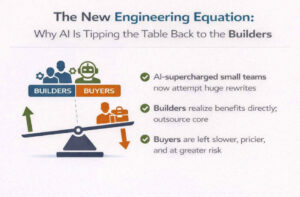
AI Engineering: How Small Teams Now Build at Scale
I have started writing production code again. Not prototypes. Not proofs of concept. Real systems. Real risk. Real consequences. At Capitec, a very small group of engineers is now tackling something that would historically have demanded hundreds of people: large scale rewrites of core internet banking capabilities. This is not happening because budgets magically increased […]
Read more →