Category: Networking + Technology + Internet

CloudScale SEO AI Optimiser: Free WordPress SEO Plugin
Written by Andrew Baker | February 2026 Download the plugin here: https://wordpress.org/plugins/cloudscale-seo-ai-optimizer/ S3 download (updated frequently): https://andrewninjawordpress.s3.af-south-1.amazonaws.com/cloudscale-seo-ai-optimizer.zip I spent years working across major financial institutions watching vendors charge eye-watering licence fees for tools that were, frankly, not that impressive. That instinct never left me. So when I wanted serious SEO for my personal tech blog, I […]
Read more →
How a Blog Post Wiped $30 Billion from IBM in One Day
Anthropic published a blog post on Monday. Not a product launch, not a partnership announcement, not a keynote at a major conference. Just a simple blog post explaining that Claude Code can read COBOL. IBM proceeded to drop 13%, its worst single day loss since October 2000, with twenty five years of stock resilience gone […]
Read more →
Cloudflare Free Tier Review: Why It Works for Enterprise
By Andrew Baker, CIO at Capitec Bank There is a truth that most technology vendors either do not understand or choose to ignore: the best sales pitch you will ever make is letting someone use your product for free. Not a watered-down demo, not a 14-day trial that expires before anyone has figured out the […]
Read more →Technology Leadership Competence: Self-Assessment Guide
A Self Assessment for Technology Leaders This questionnaire explores how you think about technology leadership, systems, teams, and delivery. There are no right or wrong answers. Each question presents four options that reflect different leadership styles and priorities. Simply select the option that best reflects your natural instinct in each situation. Select one answer per […]
Read more →Auto-Recover a Failed WordPress Instance on AWS
When WordPress goes down on your AWS instance, waiting for manual intervention means downtime and lost revenue. Here are two robust approaches to automatically detect and recover from WordPress failures. Approach 1: Lambda Based Intelligent Recovery This approach tries the least disruptive fix first (restarting services) before escalating to a full instance reboot. Step 1: […]
Read more →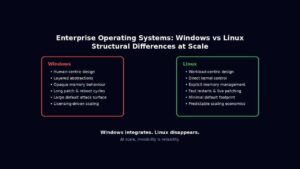
Windows Server vs Linux for Enterprises: 10 Key Differences
Enterprise operating systems for servers, are not chosen because they are liked. They are chosen because they survive stress. At scale, an operating system stops being a piece of software and becomes an amplifier of either discipline or entropy. Every abstraction, compatibility promise, and hidden convenience eventually expresses itself under load, during failure, or in […]
Read more →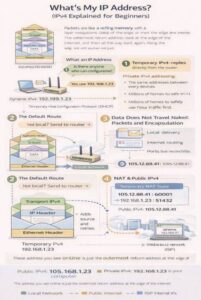
What Is My IP Address? IPv4 Explained for Beginners
Firstly, let me acknowledge that there are lots of these kinds of posts on the internet. But the reason why i wrote this blog is that I wanted to force myself to consolidate the various articles I have read and my learnt knowledge in this space. I will probably update this article several times and […]
Read more →
Dublin Traceroute on macOS: Install & Usage Guide
Modern networks are far more complex than the simple point to point paths of the early internet. Equal Cost Multi Path (ECMP) routing, carrier grade NAT, and load balancing mean that packets from your machine to a destination might traverse entirely different network paths depending on flow hashing algorithms. Traditional traceroute tools simply cannot handle […]
Read more →iperf3 Guide: Top 10 Network Performance Testing Use Cases
When something is “slow” on a network, opinions arrive before evidence. Storage teams blame the network, network teams blame the application, and application teams blame “the cloud”.☁️ iperf3 cuts through that noise by giving you hard, repeatable, protocol-level facts about throughput, latency behavior, and packet loss. This post explains what iperf3 actually measures, how it […]
Read more →WordPress on AWS Graviton: Deploy & Migrate in Minutes
Running WordPress on ARM-based Graviton instances delivers up to 40% better price-performance compared to x86 equivalents. This guide provides production-ready scripts to deploy an optimised WordPress stack in minutes, plus everything you need to migrate your existing site. Why Graviton for WordPress? Graviton3 processors deliver: The t4g.small instance (2 vCPU, 2GB RAM) at ~$12/month handles […]
Read more →