AWS, Cloud & Database Architecture
Banking-grade AWS deployments, multi-cloud trade-offs, and database design at scale. The architectural decisions that prevent 3am incidents.

AWS Risk: Stop Auditing Risks and Start Measuring Loss Pathways
Most cloud governance programmes begin with good intentions and eventually collapse under their own weight. The team starts with a handful of useful controls, someone adds tagging standards, another team adds cost optimisation, security introduces benchmark scanning, and platform engineering introduces configuration standards. Before long the report contains thousands of findings spread across hundreds of […]
Read more →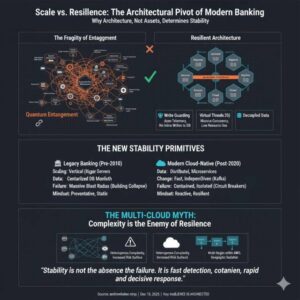
Why Bank Architecture Determines Resilience More Than Size
1. Size Was Once Mistaken for Stability For most of modern banking history, stability was assumed to increase with size. The thinking was the bigger you are, the more you should care, the more resources you can apply to problems. Larger banks had more capital, more infrastructure, and more people. In a pre-cloud world, this […]
Read more →
AWS Business Value Ratio: The Cost Health Check Your FinOps Team Is Missing
1. Two causes, one bill AWS cost posture problems in product accounts come from two distinct sources, and most remediation frameworks conflate them, which is why so much cost optimisation effort produces disappointing results. The detection scripts behind this analysis are published at github.com/andrewbakercloudscale/aws-bvr1. The more common cause is drift. Engineers make locally reasonable decisions […]
Read more →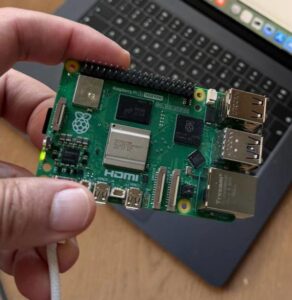
EC2 to Raspberry Pi WordPress Migration: Full Guide
How I moved andrewbaker.ninja off AWS, saved hundreds of dollars a year, and ended up with better security in the process. Running a personal site on AWS is completely reasonable when you are starting out. The tooling is mature, the reliability is excellent, and you can spin up a new instance in seconds. But somewhere […]
Read more →Memgraph & Claude Desktop: Detect Mule Accounts on macOS
1. Introduction This guide walks you through setting up Memgraph with Claude Desktop on your laptop to analyze relationships between mule accounts in banking systems. By the end of this tutorial, you’ll have a working setup where Claude can query and visualize banking transaction patterns to identify potential mule account networks. Why Graph Databases for […]
Read more →
Learning to Drive on the Edge of a Cliff: Why the VPC Is the Wrong Object for Financial Services
Most financial services firms start their cloud migration the way a learner driver would start a lesson on the edge of a cliff face. The car is already nose out over the drop, the engine is running, and the instructor’s first words are not “let’s talk about steering” or “here’s how the indicators work.” The […]
Read more →
The Exit Is the Architecture: Managing Single Cloud Supplier Risk Without Running Two Clouds
Ask a bank how it manages the risk of depending on a single cloud provider and you’ll usually hear “we’re adding a second one”. It sounds prudent and looks great on a risk register, but for the tightly coupled transactional workloads that actually matter, it’s often the most expensive way to buy the least protection. […]
Read more →
SQL Server & PostgreSQL Database Health Check Guide
Every production database accumulates the same class of problems over time. Indexes fragment as rows are inserted and deleted unevenly. Dead tuples pile up faster than background processes can reclaim them. Queries that once ran against a small table now scan tens of millions of rows because nobody added an index when the table grew. […]
Read more →Auto Stop and Start EC2 Instances with Lambda
Below is a quick (am busy) outline on how to automatically stop and start your EC2 instances. Step 1: Tag your resources In order to decide which instances stop and start you first need to add an auto-start-stop: Yes tag to all the instances you want to be affected by the start / stop functions. Note: You […]
Read more →
Regulatory Risk: The Missing Seventh Pillar of the AWS Well Architected Framework
A free, open source tool that measures how hard it would be to leave AWS across a whole AWS Organization or OU, works out what a second AWS region would cost, and turns the answers into a board ready report. Every regulated firm that runs on AWS has had the same conversation. Someone in a […]
Read more →WordPress on AWS Graviton: Deploy & Migrate in Minutes
Running WordPress on ARM-based Graviton instances delivers up to 40% better price-performance compared to x86 equivalents. This guide provides production-ready scripts to deploy an optimised WordPress stack in minutes, plus everything you need to migrate your existing site. Why Graviton for WordPress? Graviton3 processors deliver: The t4g.small instance (2 vCPU, 2GB RAM) at ~$12/month handles […]
Read more →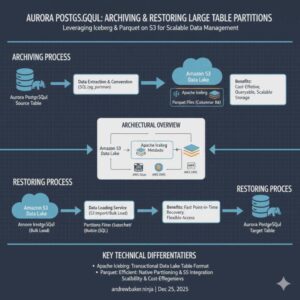
Aurora PostgreSQL: Archive Partitions to S3 Iceberg & Parquet
A Complete Guide to Archiving, Restoring, and Querying Large Table Partitions When dealing with multi-terabyte tables in Aurora PostgreSQL, keeping historical partitions online becomes increasingly expensive and operationally burdensome. This guide presents a complete solution for archiving partitions to S3 in Iceberg/Parquet format, restoring them when needed, and querying archived data directly via a Spring […]
Read more →